
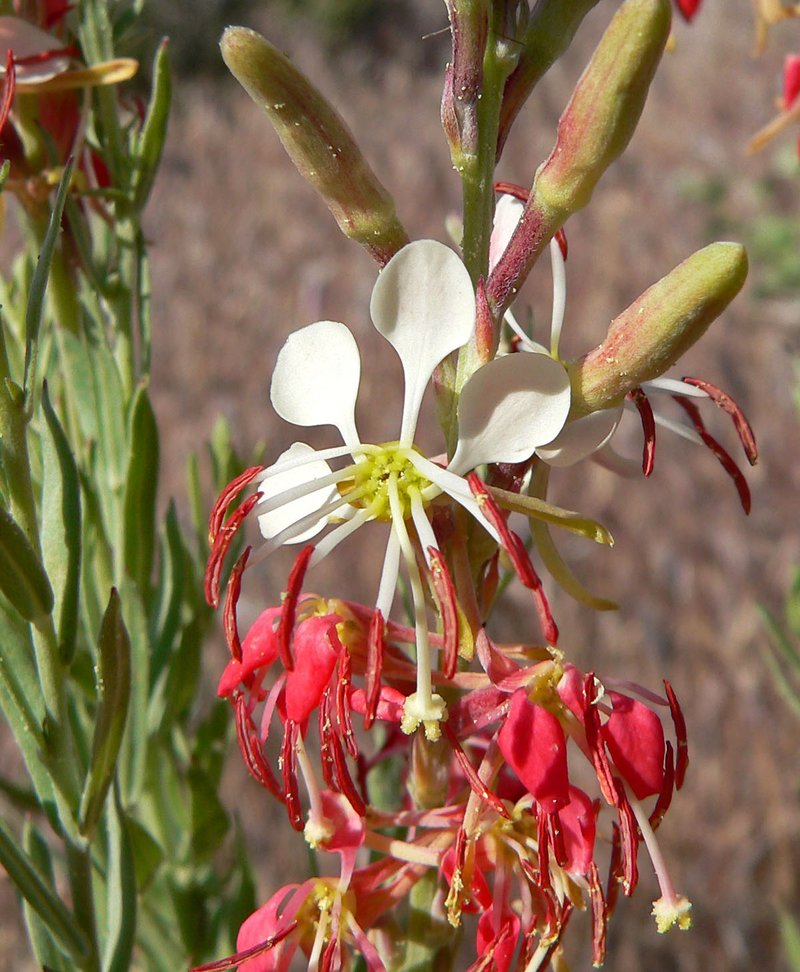
Scarlet Beeblosom (Oenothera suffrutescens)
$4.00
Out of stock
Oenothera suffrutescens / Gaura coccinea (Scarlet Beeblossom)
Perennial
A delicate wildflower of the Great Plains and desert Southwest, Scarlet Beeblossom dances in the slightest breeze on wiry, branching stems studded with tiny scarlet-and-white blooms. Its airy, informal habit and extraordinary drought resilience make it a perfect choice for dry borders, rock gardens, and pollinator plantings where few other plants will thrive.
🌿 Key Traits
Continuous Bloom Machine: Produces a non-stop succession of small, four-petaled scarlet flowers from late spring all the way through the first hard frost — one of the longest bloom seasons of any native.
Featherweight Form: Slender, branching stems reach 1–2 feet, creating a fine-textured, billowing effect that softens hard edges beautifully.
Rich Fall Color: Foliage takes on attractive red and bronze tones as temperatures drop, extending seasonal interest well past bloom.
Compact and Tidy: A well-behaved spreader that fills gaps without overwhelming neighbors — ideal for the front or middle of a border.
☀️ Growing Conditions
Light: ☀️ Full Sun (thrives and blooms most heavily in full sun).
Soil: 🌱 Prefers lean, dry, well-drained soils — sandy, gravelly, or rocky; struggles in rich or consistently moist ground.
Water: 💧 Low; one of the most drought-tolerant native wildflowers available — little to no supplemental watering once established.
Hardiness: ❄️ Zones 4–9 (tough and reliable across a wide range of climates).
🌎 Ecological Benefits
Bee Specialist: The long tubular flowers are perfectly shaped for long-tongued native bees, including digger bees and masked bees that few other plants serve.
Butterfly Nectar Source: Regularly visited by skippers, sulphurs, and hairstreaks throughout its exceptionally long bloom window.
Hummingbird Draw: Scarlet coloration and abundant nectar make it an attractive late-season stop for Ruby-throated Hummingbirds fueling up for migration.
Dry Habitat Anchor: As a true xeric native, it stabilizes dry, disturbed soils and supports the specialized insect communities that depend on open, well-drained habitats.
Image credit: Stan Shebs